Accessible putting on, adjustment, fit, and everyday interaction, shaped with the people who will use the design.
A glove can be easy to wear once it is on and still be difficult to put on, adjust or remove. This area starts with those moments. Bring lived experience, a practical question, a sketch, a sewing detail or an observation about an everyday task. You do not need a diagnosis, specialist vocabulary or a finished product to contribute.
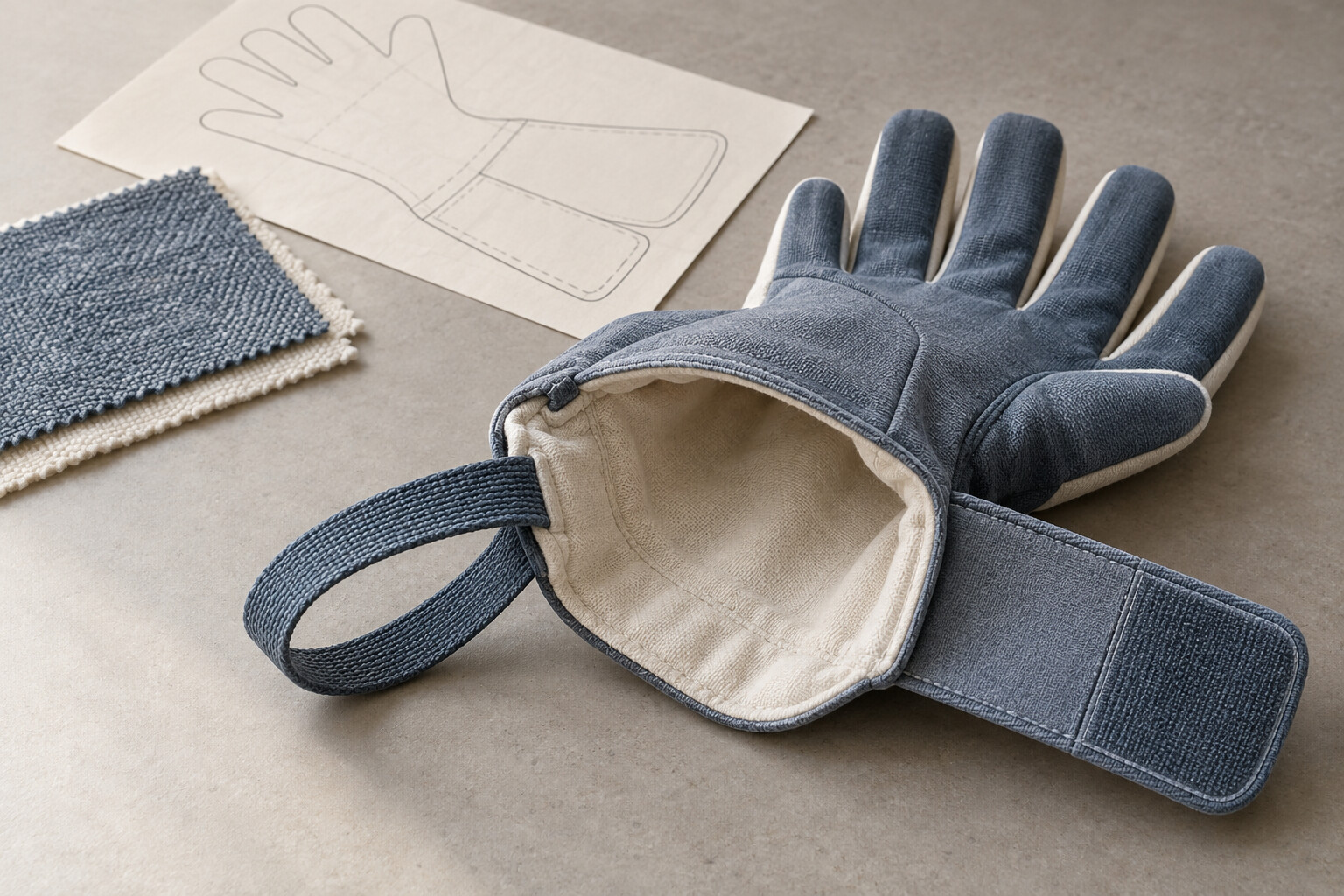
AI-generated concept image for discussion; it does not show a tested Zelax product.
Begin with a person and a task
Useful starting points include a cuff that is difficult to open with one hand, a fastening that is hard to locate by touch, an uncomfortable seam, or care instructions that are difficult to follow. Describe the situation: what the person wants to do, what currently gets in the way, and which choices matter to them. Ask before assuming that speed, independence or a particular appearance is their priority.
Different people may prefer different solutions to the same task. Someone may want a larger opening; someone else may prefer a small opening that stays in place. An adjustment that helps one movement may interfere with another. Treat these differences as design information and keep the participant involved when choosing what to change.
Three distinctions that make discussions clearer
- Access and fit: getting a hand into a glove, adjusting it and removing it are separate questions from how it fits during use. Discuss the whole sequence.
- Assistance and choice: a design can support a task without making decisions for its wearer. Explain what remains adjustable, optional or removable.
- A personal observation and a general claim: “this tab was easier for me to locate” is useful evidence. It does not establish that the design suits everyone or provides a medical benefit.
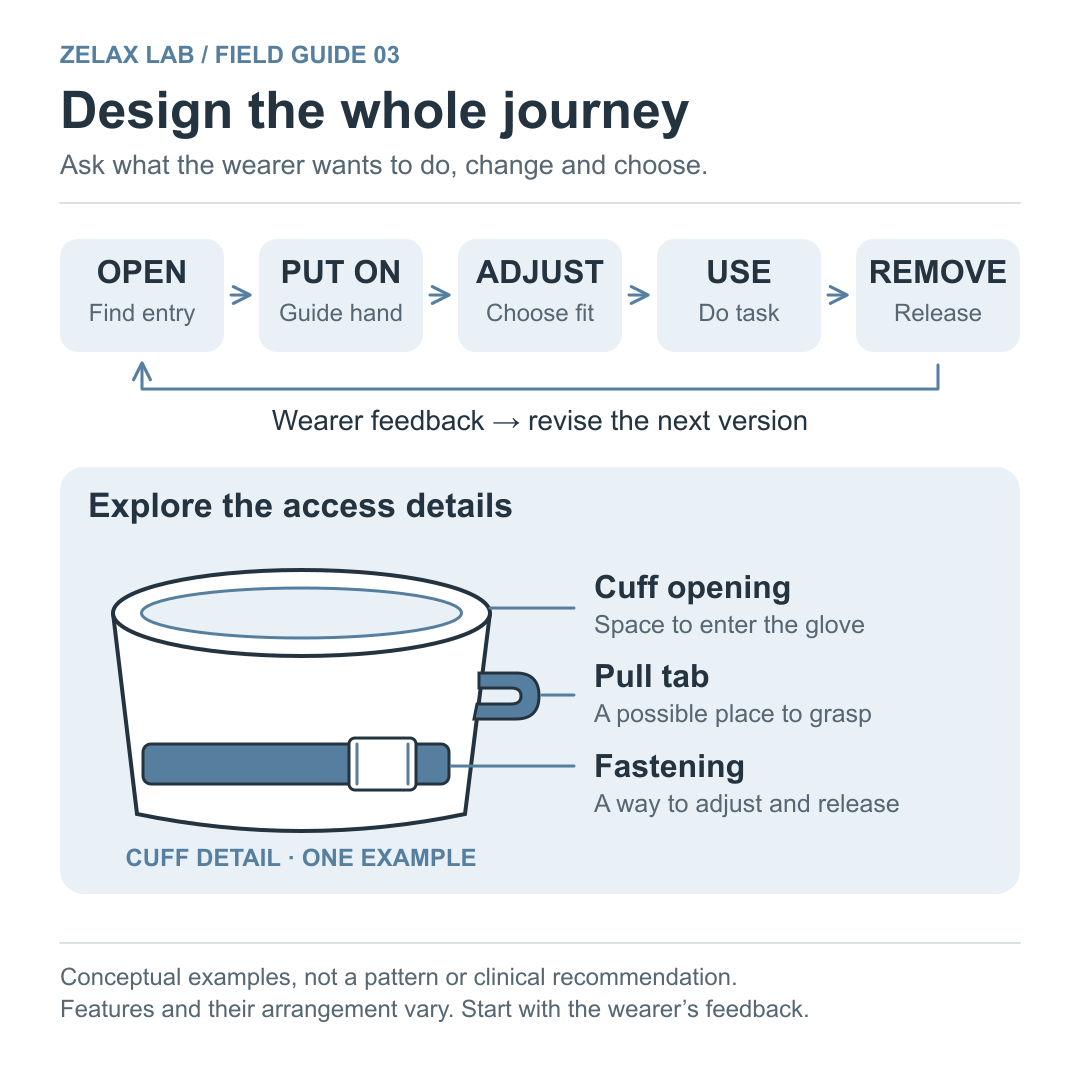
Conceptual wearing journey: open, put on, adjust, use and remove. The cuff, pull tab and fastening are example design features; their arrangement varies between gloves.
Small ideas worth exploring
An opening you can find. Sketch two cuff arrangements and mark the place a wearer would grasp. Invite feedback on reach, orientation and the sequence of movements before making a fitted prototype.
An adjustment you can understand. Compare a contrasting visual marker with a raised tactile marker. Explain what each marker communicates and how someone would tell whether the adjustment is complete.
Feedback without hand photographs. Offer a labelled outline, a text description or an audio explanation with a transcript. Let contributors choose which format and personal details they share. A design conversation should remain possible without posting an image of someone’s body.
For a collaboration, let participants help frame the question and review how their feedback is represented. Agree how contributions will be credited and what may be shared publicly. Organized research or sustained design work should also make payment and participation expectations clear before recruitment.
Start a useful discussion
Copy this short template:
Task and context: What would the wearer like to do?
Current barrier: Which step is difficult, and according to whom?
Idea or comparison: What change are you considering?
What exists: Observation, sketch, sample or tested prototype?
Feedback wanted: One question, with text-only answers welcome.
Resources and nearby conversations
Microsoft Inclusive Design introduces a method for noticing exclusion and learning from different experiences. IDEO.org’s Co-Creation Session explains how participants can help make and shape ideas, beyond answering interview questions. These are methods to adapt thoughtfully, not evidence that a particular glove works.
Join the opening question about putting on and using gloves. For comfort and movement, explore Human performance; for sensors or feedback interfaces, visit Sensing and robotics. One clearly described everyday difficulty is enough to begin.