Fashion, craft, form, materials, and cultural expression through gloves.
What could a glove express?
A glove can change how a hand looks, moves and is understood. A cuff might extend a silhouette; a seam might become a visible line; a familiar material might tell a story about a place or a making tradition. This area welcomes fashion, costume, performance, craft, material exploration and questions about cultural meaning. You can begin with an observation, a rough drawing or words alone.
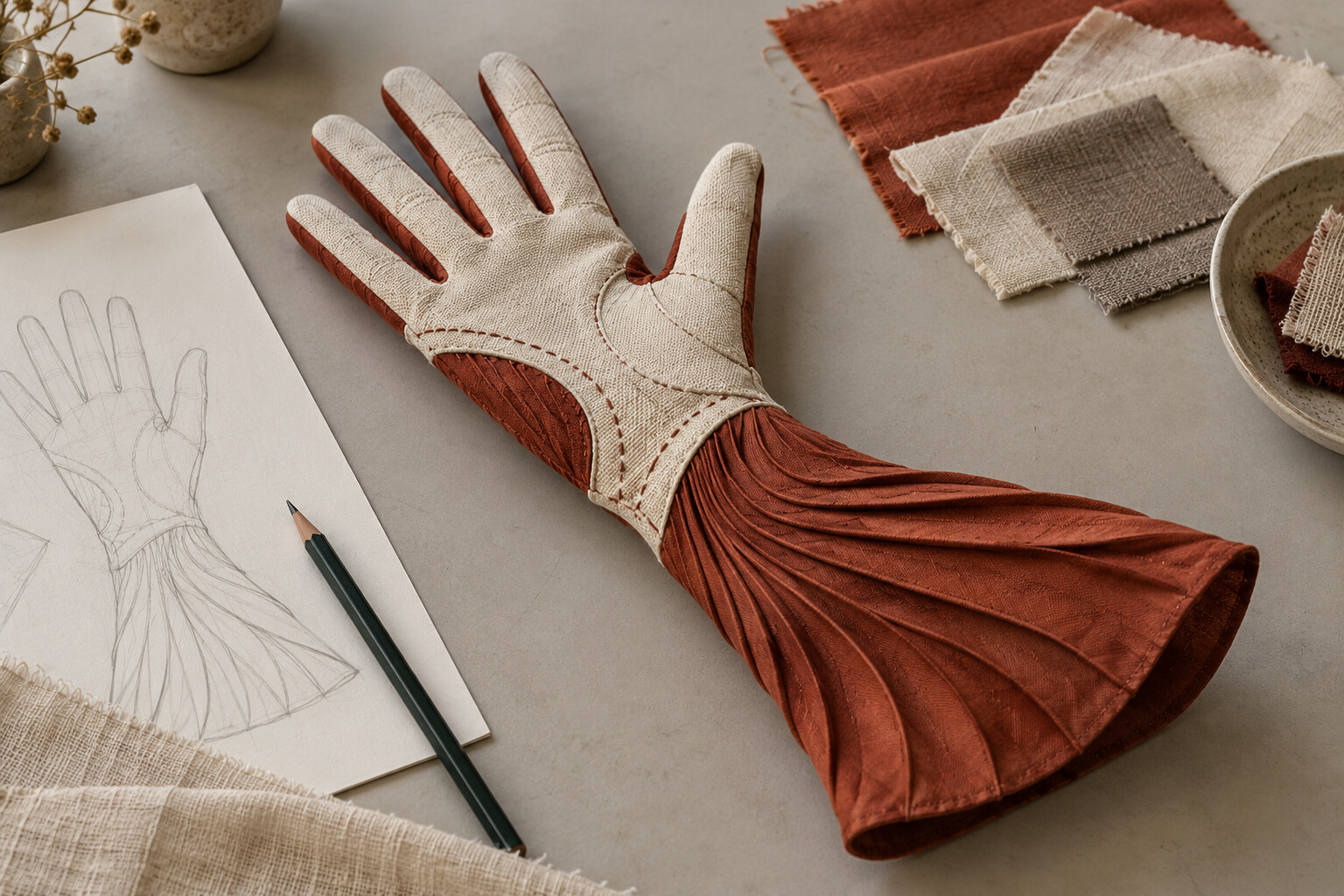
AI-generated concept image: a sculptural cuff and visible stitching suggest possibilities for discussion. This is not an existing Zelax product or a tested prototype.
Three concrete starting ideas
-
One gesture, three silhouettes. Choose a simple gesture, such as an open hand or a relaxed fist. Sketch three cuff shapes around it: close to the wrist, softly folded, or extended. What does each suggest? Show the same gesture in each drawing so others can compare the design choice. You do not need a finished pattern.
-
Let construction become expression. Pick one detail: a contrasting seam, a pleat, a woven insert or a visible repair. Draw where it belongs and explain why. Does it guide the eye, reveal a second colour when the hand moves, or make the making process visible? A small material sample can be more useful than a polished rendering.
-
Begin with a story and credit its source. Choose an occasion, an object from your own experience, or a documented historical glove. Describe the connection you see between its use and appearance. If you draw from a living craft tradition, name the makers or community where known and explain your relationship to the reference. Invite context instead of treating a motif as decoration without a history.
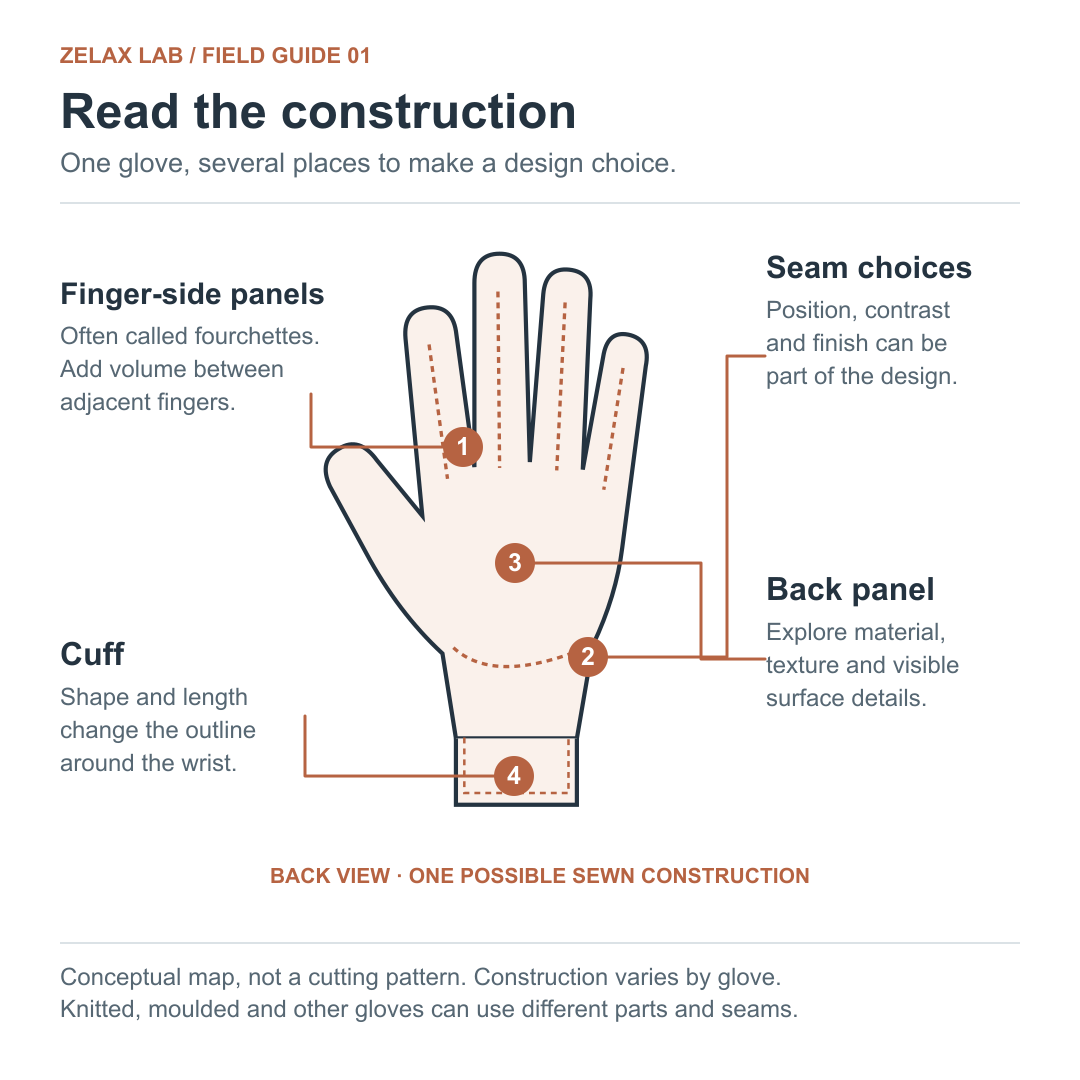
Illustrative glove diagram: the back, finger-side panels, cuff and seam choices offer different places to explore form and construction. This is a conceptual guide, not a cutting pattern or manufacturing specification.
Make your idea easy to discuss
Show the whole glove, then one detail. If you share photographs, explain what they show and credit the maker and photographer. A palm view and back-of-hand view can clarify a shape; a short description can explain the same idea without an image. Label a concept, a mock-up and a finished object accurately. Tell us what remains unresolved, and ask for feedback on one decision at a time.
Two references to explore
- ASU FIDM Museum: Gloves in the 20th century. Its account of Dior evening gloves credits designer Christian Dior, glovemaker Lionel Legrand and embroidery house Rébé. Look at how the cuff and the different makers’ contributions shape the object.
- V&A: a French glove from the 1820s–1830s. The record describes yellow leather, silk stitching and decoration around the thumb and back of the hand. Look for the relationship between construction and ornament. Follow the museum link to view its images; no museum image is reproduced here.
A simple posting template
My idea or reference: …
Who or what occasion it is for: …
The shape, material or making choice: …
What I have made or observed so far: …
My source or collaborators: …
One question for the Lab: …
Where to begin
Reply to What can a glove express?, or start a topic for your own question.
If the main question is comfort or dexterity during a task, try Human performance. If it concerns putting a glove on, adjustment or access, try Assistance and accessibility. If sensing, haptics or a robotic hand is central, try Sensing and robotics. Choose the closest area and link related discussions; many ideas will connect more than one.