Fit, dexterity, grip, comfort, sport, work, and repairability for human-worn gloves.
Start with what the hand needs to do
Which small task becomes awkward when you put on a glove? Picking up a part, holding a handle, using a zip or feeling a seam can reveal a useful design question. This area connects everyday experience with fit, movement, materials and repair. Wearers, makers, designers and researchers are welcome. A clear description of a difficulty is a valuable contribution, even when you have no proposed solution.
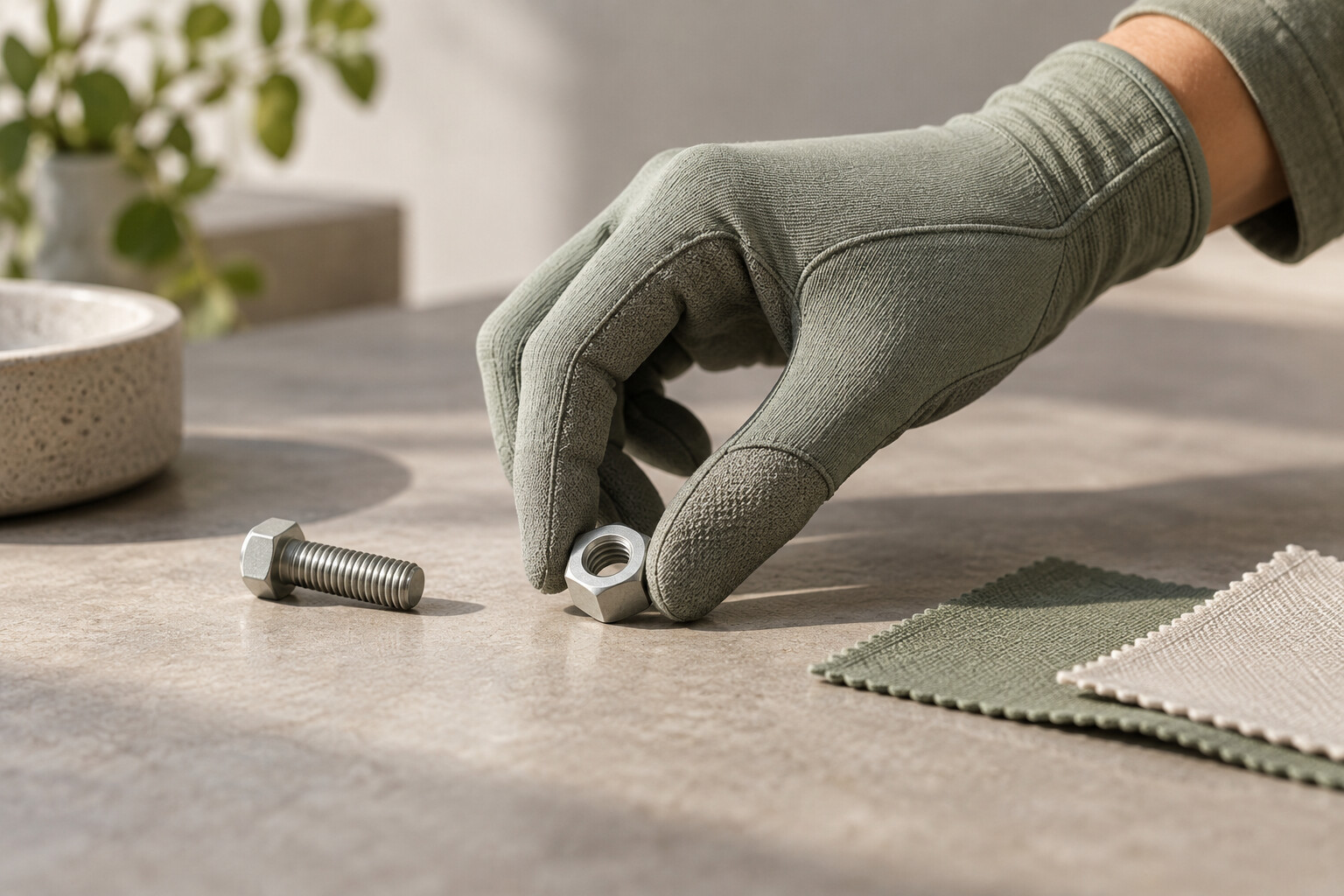
AI-generated concept image: picking up a small nut makes a dexterity question concrete. This is not an existing Zelax product or evidence from a measured experiment.
Three concrete starting ideas
-
Make a fit observation map. With a glove you already use, describe where there is spare material, pulling, pressure or a seam you notice. Does that change between an open hand and a relaxed grip? Mark the location on a simple sketch. Include the glove’s labelled size and material if known; “medium” alone does not describe your hand or the fit.
-
Compare one harmless tabletop task. Try moving the same few large buttons or small parts between two containers using two existing glove options. Keep the objects, surface and task the same. Note dropped objects, changes of grip, time if useful, and how the task felt. Repeat a short comparison and state its limits: one person’s experience can suggest a question, but cannot establish what works for everyone.
-
Trace wear back to an activity. Photograph or describe one worn area on an everyday glove. Does it correspond to a contact point, repeated fold or seam? Sketch a change you would investigate, such as a different seam position or a replaceable panel. Ask what that change could add in bulk, stiffness, making effort or repair difficulty. Treat the proposal as a question until it has been tried.
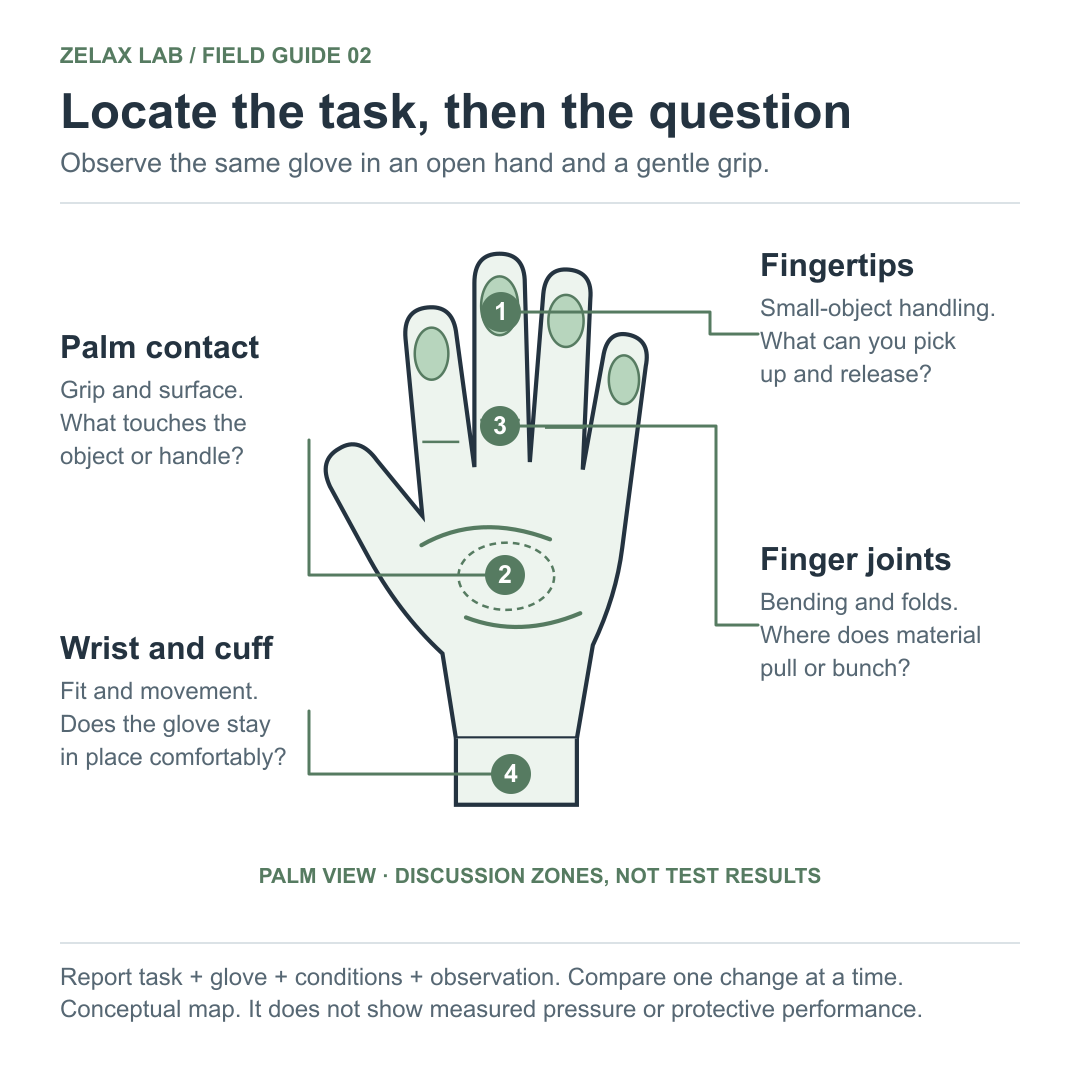
Illustrative observation map: fingertips, palm, finger joints and cuff help locate a question about task, material or fit. These are discussion zones, not measured pressure or performance results.
Make a comparison useful
Describe the person, task, glove and conditions before the result. Was the glove dry? Was this a brief trial or an observation during regular use? Identify which hand was used and explain any measurement units. Keep personal information optional. Include an unexpected result or a trade-off, such as easier handling alongside more noticeable seams. Use harmless tasks for informal comparisons; work that requires protective equipment needs its own appropriate assessment.
Two references to explore
- UK Health and Safety Executive: choosing gloves—size, comfort and task. The wearer and task sections discuss fit, folds from oversized gloves and involving the people who use them. Use these sections to sharpen your questions about an observation; the page’s protective-glove guidance is specific to its workplace context.
- Canadian Centre for Occupational Health and Safety: hand-tool ergonomics. This resource considers the tool, user, task and work setting together, and notes that gloves affect handle-length needs. It helps frame why a glove and the object it touches should be considered together, rather than selecting a glove feature in isolation.
A simple posting template
Task and setting: …
Glove and labelled size: …
What becomes difficult, and where: …
One change or comparison: …
What I observed and what remains uncertain: …
Feedback I would find useful: …
Where to begin
Join Which everyday task should a better glove make easier?, or start a topic about your own task.
For putting on, adjustment and access shaped by the user’s experience, see Assistance and accessibility. For silhouette, craft and cultural meaning, see Expression and culture. For sensors, feedback or robotic hands, see Sensing and robotics. Links between areas are welcome; start where your main question fits best.