Human-worn sensing, haptics, teleoperation, robot-hand coverings, and physical AI: connect materials and engineering through clear questions and evidence.
“Robotics glove” can describe several very different things. A person may wear a glove that measures finger movement. A robot hand may wear a replaceable covering. An interface may return a vibration or other feedback to its operator. This area welcomes all of these, along with the materials, software, manufacturing and design questions that connect them.
You can contribute a diagram, material comparison or clear question without owning a robot.
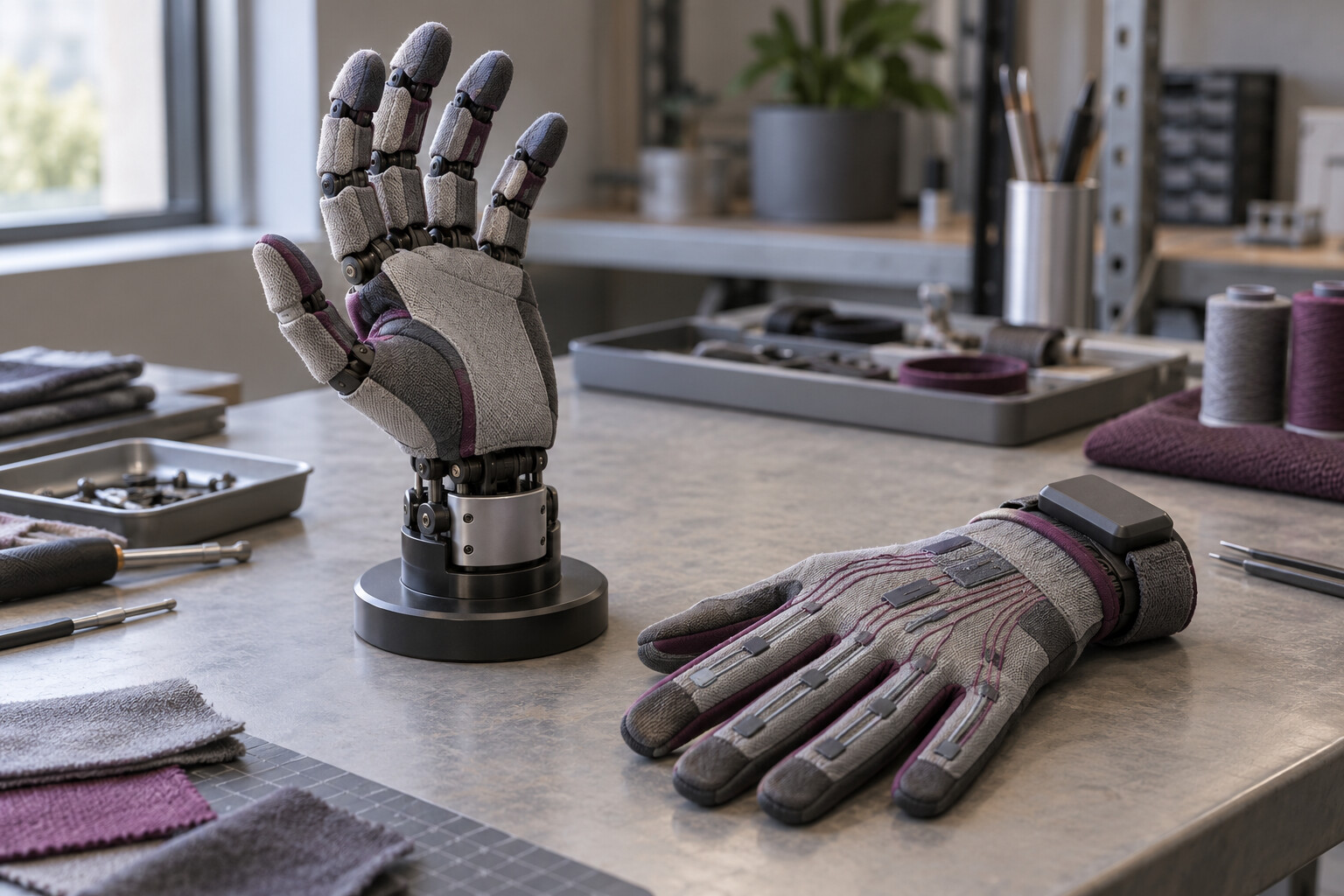
AI-generated concept image for discussion; it does not show a tested Zelax product.
Say which part of the system you mean
- Human-worn sensing: captures information such as finger movement or contact. State what is actually measured and what the software estimates from those measurements.
- Haptic feedback: creates a sensation for the wearer. A vibration cue and a mechanism that resists finger movement provide different kinds of feedback; describe the specific effect.
- Teleoperation: a person controls a remote robot. Hand measurements need a mapping to the robot’s available movements; human and robot hands may have different shapes and joints.
- Robot-hand coverings: add a contact surface around the robot’s structure. Material thickness, seams, grip, flexibility, replacement and access to sensors all become design questions.
- Physical AI: learning and decision-making for systems acting in the physical world. Glove measurements or teleoperation demonstrations can be inputs to a research workflow; collecting data alone does not establish autonomous capability.
A helpful system sketch separates the outward command path from any returning sensor information. Identify whether feedback reaches the operator, the robot controller, both, or neither. Some systems have no haptic return at all.
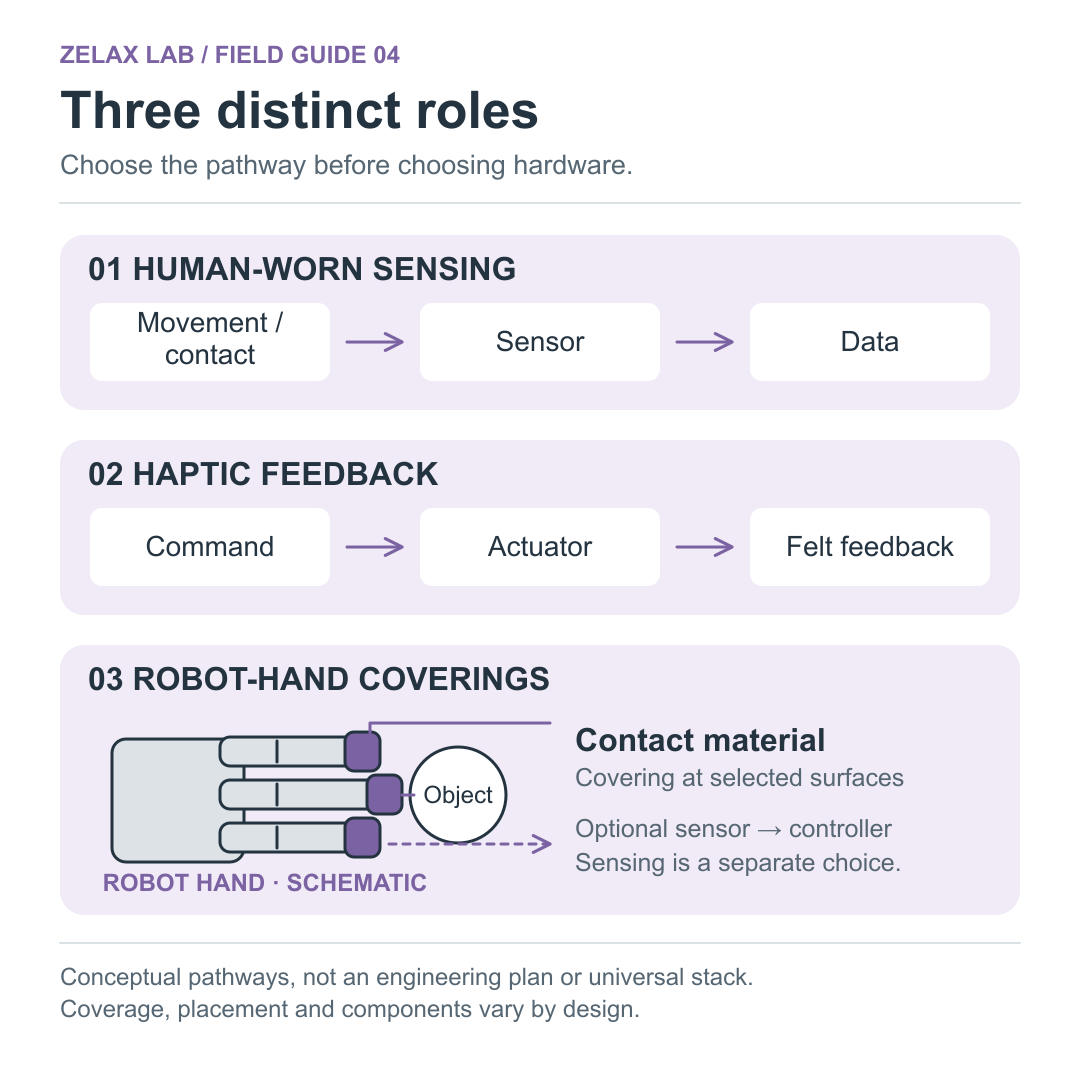
Conceptual pathways: sensing converts movement or contact into data; haptics turns commands into felt feedback; a robot covering provides a contact surface, with sensing optional. Placement and coverage vary by design.
Three approachable starting questions
What should a covering change? Sketch a removable fingertip layer for a hypothetical robot hand. Identify its attachment, replaceable region and contact surface. Discuss how a thicker layer could alter both movement and the information a sensor receives. Label the drawing as a concept, not a tested component.
What information is missing? Draw a simple motion-capture workflow and label the measured signal, estimated hand pose and intended robot movement. Mark uncertain steps. This can reveal whether the design question concerns glove fit, sensing, calibration or the control mapping.
What would make a result interpretable? When sharing a prototype, state its hardware, software, task and conditions. Explain whether a number describes one sensor or the whole system; include relevant failures and limitations.
Start with sketches, offline data or simulation when those can answer the question. Powered robot experiments need appropriate facilities and supervision; this discussion space does not supply a tested control or safety system.
A few useful terms
Calibration relates measurements to a known reference. Latency is delay between stages. Tactile sensing measures contact-related information; haptics concerns touch sensations delivered to a person. Name the signal and its direction.
Start a useful discussion
System: Human-worn glove, robot covering or interface?
Task: What should it help someone or something do?
Signals: What is measured, estimated, commanded or felt?
Evidence: Concept, simulation, prototype or measured result?
Question: Which specific design choice needs feedback?
Resources and nearby conversations
MANUS’s robotics overview is a manufacturer’s example of hand-tracking gloves used in teleoperation and data collection; read its specifications as vendor claims. MIT’s GelSight Svelte research overview illustrates a different branch: camera-based tactile sensing inside a robotic finger. Neither is a Zelax project or endorsement.
Continue with the opening sensing and robotics question. Wearability belongs alongside Human performance, and interfaces shaped around people’s access needs connect with Assistance and accessibility.